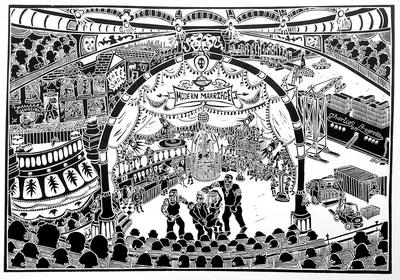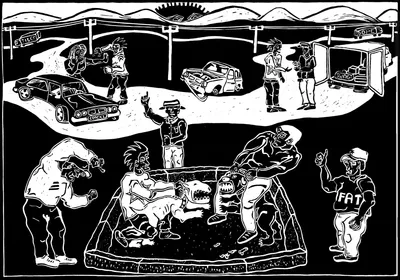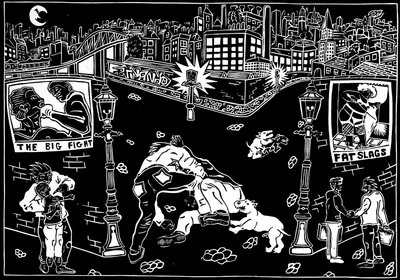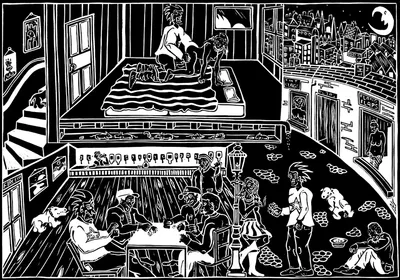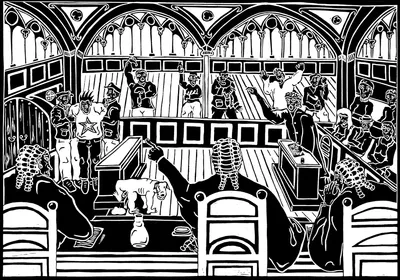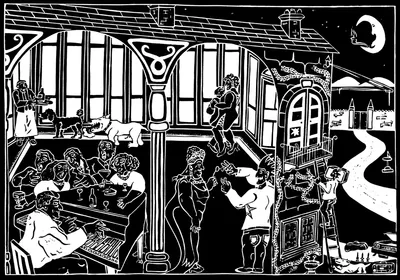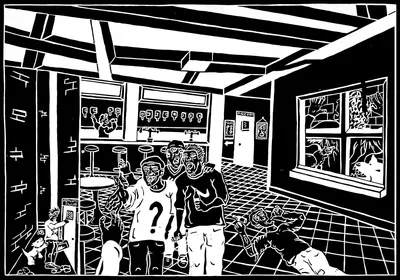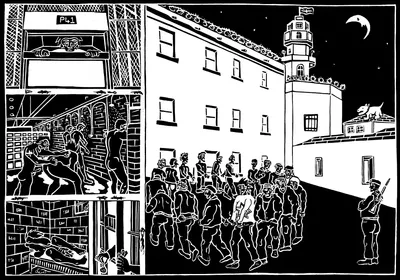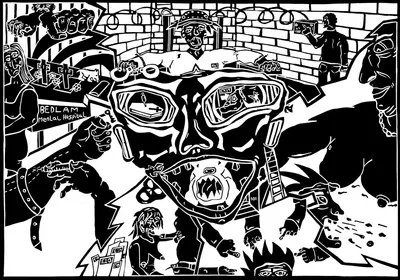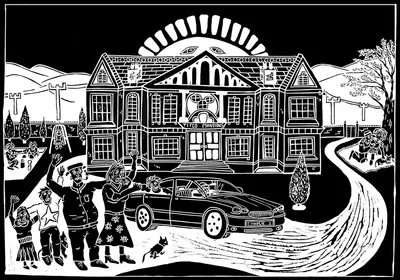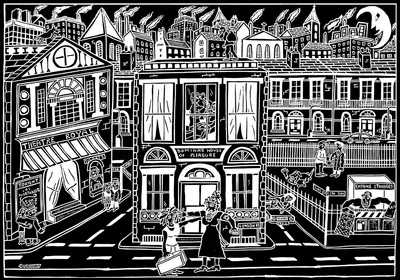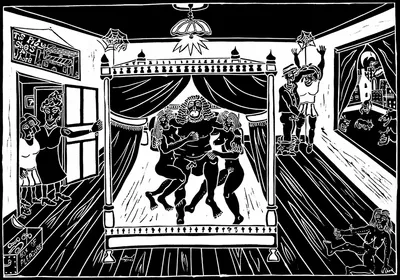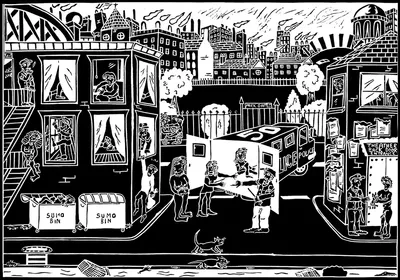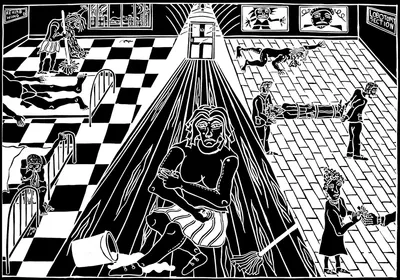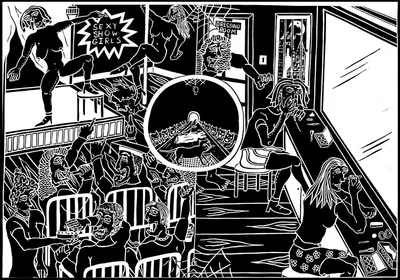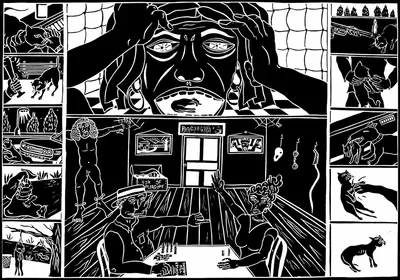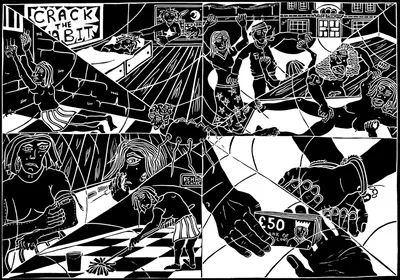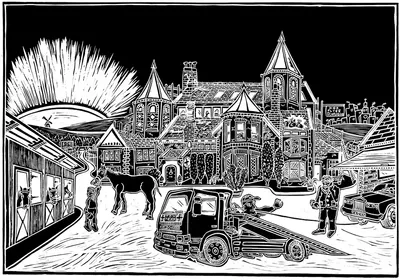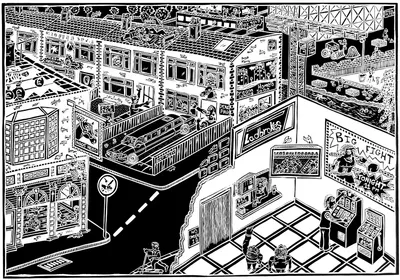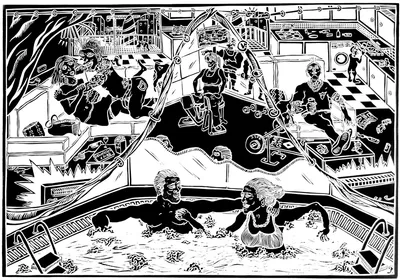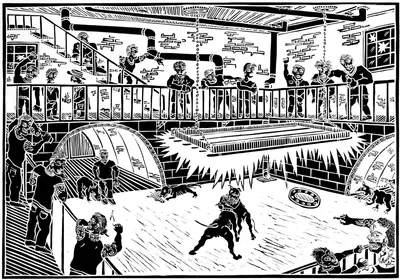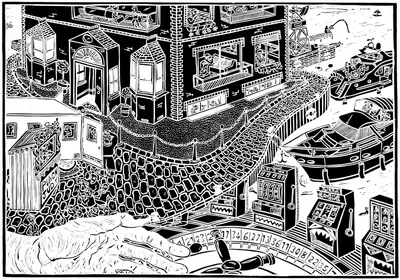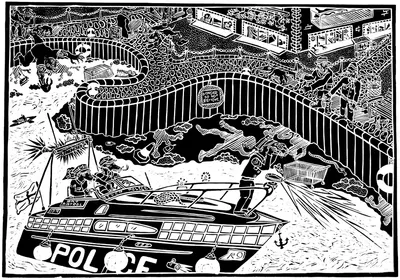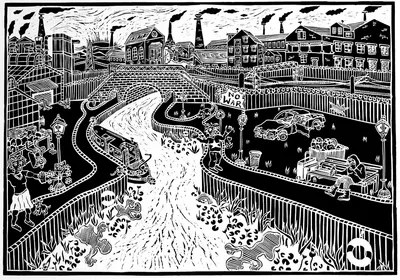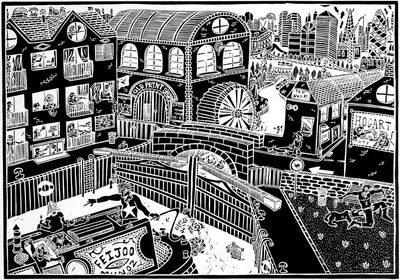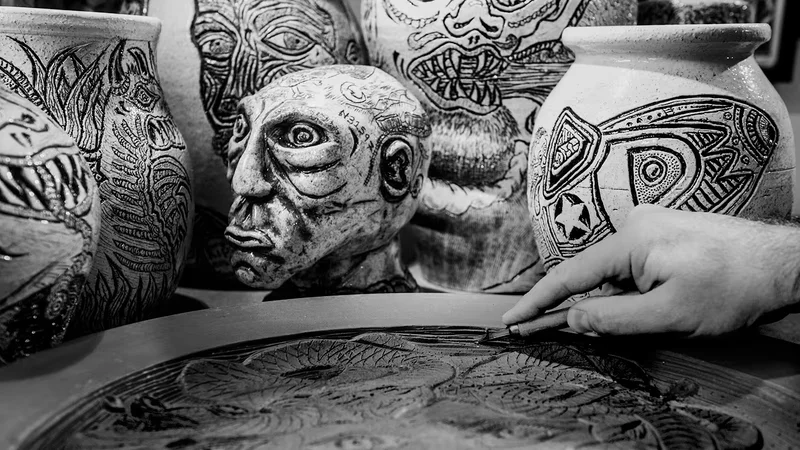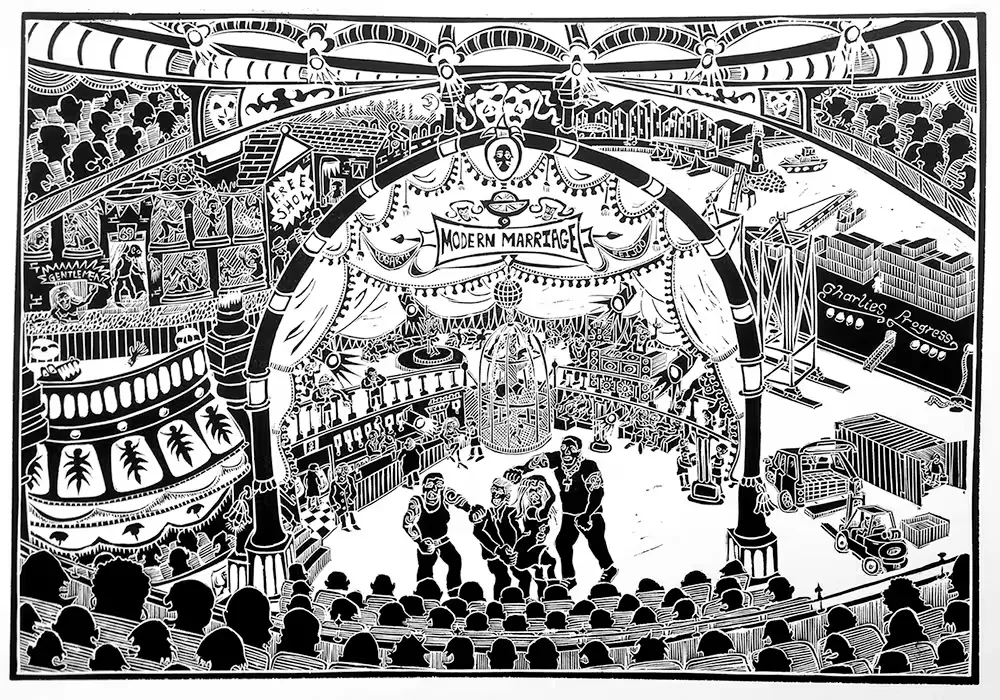
This trilogy of works is Inspired by William Hogarth's A Rake's Progress, A Harlot's Progress and Marriage a la Mode, the eternal stories of money, corruption, dissolution, crime and redemption. In the book versions a contemporary style of writing is utilised to bring new rhythms to Hogarth's cycles. Rap, para rhyme and sharp word play tie up this great saga which is just as relevant in regards to eighteenth century London as the twenty first century. Hogarth completed his A Harlot's Progress in 1731 and it contained six frames. A Rake's Progress followed in 1735 with eight frames and Marriage a la Mode was completed in the years 1743-45 with six frames. The order of these Progresses is slightly different and a consistency of eight frames for each cycle was decided on. Number four of each Progress is a single frame and is often a defining moment of the story. One frame: one key message. This frame is often used as a standalone image in exhibition. In writing a Prologue and Epilogue for the series as a whole, a frame is created in terms of artistic expression, narrative and homage to Hogarth. In his titles, Hogarth generalised his characters to types - a Rake, a Harlot etc., but for this modern version not only were actual names given, but very specific details were created in the texts, hence the use of word play: Crack and Charlie make links to drugs and Spike the dog implies multiple meanings of violence. This is in the spirit of Hogarth who had Earl Squanderfield for his Marriage a la Mode — a clear link to the father of Crack, Charlie and Tara. He lives in a 'faux' mansion placed incongruously in the countryside. Threaded through the work are instances of hope, humour and horror directly rooted in the vision of the artist as well as the moralities and codes of society. Little themes, running gags and asides underpin this version with the loyal dog, the fighting dogs, the moon (sometimes sinister, sometimes benign), and particularly the rats, which run through sewers and invade all areas of human life. Cityscapes background all scenes, some with specific geographic references (London), others universal in their topicality with modern urban life. The stage is set. The curtain rises on a convoluted tale. Each of the three narratives is played out for us to spectate and observe, reflect on and consider our own judgements.
The Three Progresses